
Cinema Centennial Confessional

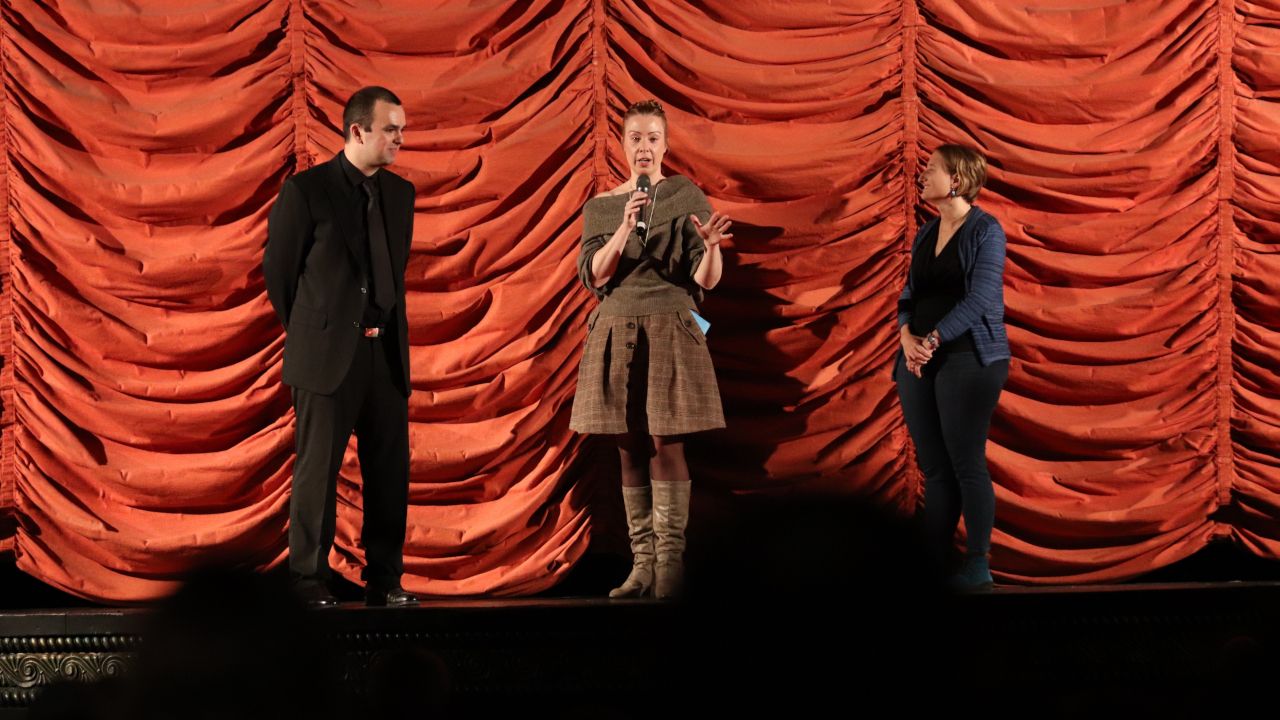
Now that BWiFF has successfully completed its first Cinema Centennial event, showcasing films from 1919, I think it’s about time for my first public confessional. So here it goes: I am not exactly what you would call a silent film aficionado. Prior to preparing for this year’s Cinema Centennial, I had in fact seen very little silent film at all. Most of what I had seen were clips or shorts shown in film classes I’d taken in my youth. So when choosing the films for this year’s event, I was just about as intimidated by the task as I was thrilled by the opportunity.
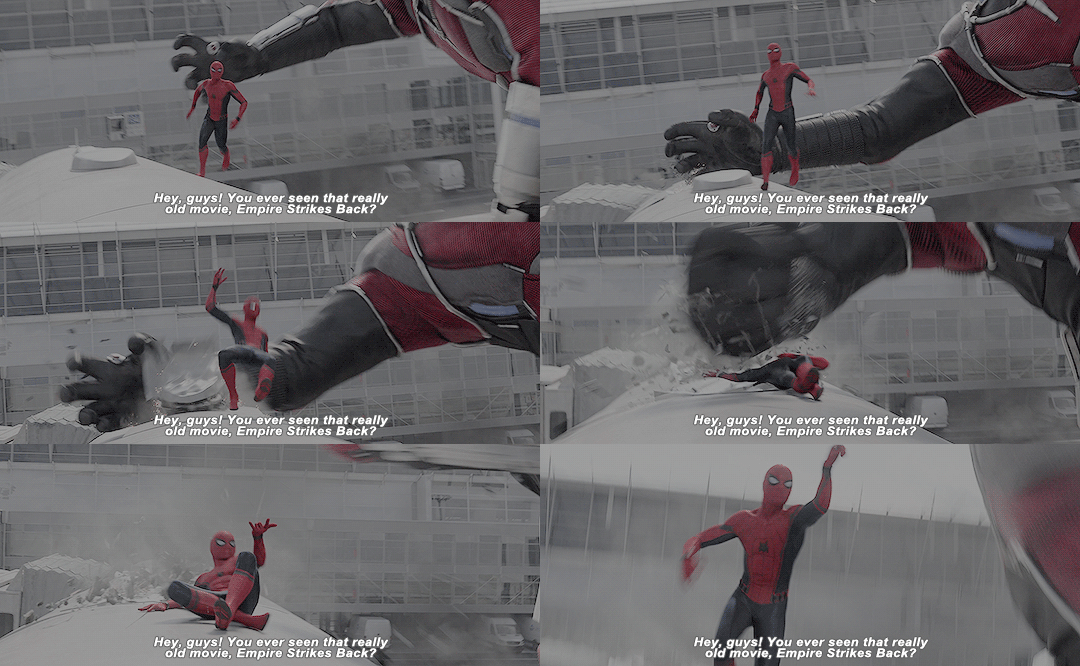
My pride will now step in for a moment to make it clear that I am no stranger to classic film. And no, I am not referring to Ferris Bueller’s Day Off or Back to the Future as “classic” film because in my mind they are not old enough to be considered a classic. I find it disturbing when I reference a movie from the 1980's or 1990's, which has not been remade recently, and get a blank look in return. It is in those moments, the ones where I realize the person I am speaking with wasn’t born when the movie I am referring to was made that I really feel old. Obviously, I am not alone in this. Even Iron man feels the same as I do whenever Peter Parker speaks.
So now that we have established that I not only feel old, but I also feel bad for all the folks in this world that missed out on essential films like Airplane! simply by being born too late; back to what I consider classic film. Or at least the classic film I consider myself well-versed in. I am a devotee of movies made in the 1930's, 40's, and 50's. My first screen crush at age 10, (after watching the ‘Road Movies’ on AMC), was Bob Hope. Yeah, I am admitting to that in a public forum. Go ahead and judge me. I am also a fan of behind the scenes fun facts. For instance, did you know that John Wayne’s real name was Marion Morrison or that Cary Grant’s real name was Archibald Leach? Cary Grant, now there is a man worthy of a first crush – no offense to Mr. Hope.
Silent films, however, were not something I could really speak to outside of what I had learned from watching Singing in the Rain or Chaplin or from what we covered in those film classes I spoke of earlier.
Admittedly, I initially thought that 1919 was toward the beginning of the silent film era. Shameful! I am embarrassed of my ignorance. In an effort to make up for this lack of foreknowledge, I would like to take this opportunity to share with you what I have learned. In this article, I will be focusing on the films we showcased this year in particular. If you are interested in looking at the bigger picture, (so to speak), I recommend a viewing of PBS’s 10 minute silent era crash course. I found it very entertaining.
I mentioned before that this was our first Cinema Centennial event. The idea being, let’s put something together and see how it goes. Not an outright Mickey and Judy put on a show in the barn kind of spontaneity, since the folks here at Blue Whiskey have been putting together film festivals for years. This material, however, was foreign territory to us all. Even to the in-house classic film know-it-all, otherwise known as myself. In that strange magic of the movies kind of way, our program had a serendipitous theme we were unaware of until I started doing some reading up on the films we had chosen. We only found out afterwards what we had put together was an evening of “firsts." Also, oddly enough, each of our films somehow has a connection to Superman. That is just weird if you ask me.
Feline Follies (1919)
Our first film of the evening was this animated short which provided audiences with the first appearance of Felix the Cat. In Feline Follies, he is referred to as “Master Tom”. But by his third film, released a month later, his name would change to Felix. Today many might not recognize Felix or know his name upon seeing him, so allow me let you in on some of what I found out about Felix the Cat. Felix’s design was in part inspired by Charlie Chaplin’s character of the Tramp. Felix was the world’s first cartoon superstar. Appearing in cartoons released once a month, Felix is just about everywhere between 1919 and 1928. We are talking comic strips, songs, products of all kinds. As Yogart from the movie Spaceballs would tell us, “Merchandising! Merchandising! Where the real money from the movie is made.” Ever wonder what the first Macy’s Day parade Balloon was? Felix the Cat, of course.
In 1928, the year Felix’s main rival is created - and yes I am speaking of the infamous Mickey Mouse, Felix is associated with another first. A thirteen inch statue of Felix the Cat rotating on a small turntable is the star of the early test transmissions by General Electric for this thing called Television.
The Tantalizing Fly (1919)
The Out of the Inkwell series (1918-1929) brought us the second film of the evening. This animated short stars a little clown, a fly, and an animator. Koko the Clown won’t get his name until 1923 so for now he’s only the little clown. The animator is Max Fleischer. Max didn’t just give us the little temporarily nameless clown he also invented this thingamajig called the Rotoscope, but we will get into that in a moment. Since I didn’t find at least two sources to confirm whether this film is the first appearance of the clown or the rotoscope, I can’t make that claim. But I do strongly suspect it to be the case. I can tell you part of what makes Koko so special is Dave. Dave Fleischer was a clown whose movements were recorded on film and then projected back on to a glass panel where his image was then traced over frame by frame, which is why the little clown’s movements seem so real.
These days we have actors dress up in special suits so that a computer can capture their image and movements. That data can then be used in creating characters through animation and or special effects with graphics software. The technology has changed, but the idea is essentially the same. The device Max invented to capture and trace Dave’s movements through animation is called a rotoscope. The new-fangled version with the computer and special suit is called motion capture. Where the rotoscope brought us characters like Koko, early versions of Superman, and even Roger Rabbit; motion capture gave us characters like Gollum from The Lord of the Rings and those folks from the movie Avatar.
You remember that Avatar movie, right? The one with the really tall blue aliens where James Cameron took the plot of Dances with Wolves and created the new classic story of ‘Dancing with really tall Smurfs’. Okay, I admit to some bias on that last one. A topic for another day.
So, Koko the Clown is the first character created using the rotoscope. So in my mind, that famous evolution of man image could be altered to show the evolution of the rotoscope to motion capture. Beginning with Koko the Clown on one end and ending up with Caesar from Rise of the Planet of the Apes on the other end. It’s a fun thought anyway.
Bumping Into Broadway (1919)
Arguably the most famous image of Harold Lloyd is of him dangling precariously off of the side of a building hanging from the minute hand of a large clock. That film, released in 1923, is called Safety Last! Film teachers will point out that Harold is hanging on to that clock with a few less fingers than he was born with. Harold lost his right thumb and forefinger as well as his sight in an accident which occurred a few months after Bumping into Broadway had been filmed. A prop bomb exploded in his hand during a publicity shoot that blinded him and took part of his hand with it. How it is possible for a prop bomb to explode or to mistake a real bomb for a prop is not something we will be covering today, so don’t get your hopes up. The good news though was by the time Bumping into Broadway was released in theaters, Harold’s eyes had miraculously recovered and he was able to attend the premiere.
This film is the first two-reel picture of Harold Lloyd’s with his “glasses character.” Prior to creating this optimistic every-man character forever recognized by those unique pair of glasses, Harold had been known and successful for his Lonesome Luke character. When asked why he abandoned Lonesome Luke, Harold reportedly replied, “Charlie (Chaplin) had the market cornered on that. He had it down to a science.”
After watching Bumping into Broadway or any other of the films in which he plays the go getting guy with the glasses it’s hard to picture Lloyd as anything else in my opinion anyway.
He was so famous for those glasses that Lloyd found that he could hide his identity simply by taking them off. This last bit of trivia had a notable impact on Joe Shuster and Jerry Siegel. In 1938, when they created the look of Clark Kent, they modeled him after the man known for altering his identity through a pair of glasses.
When the Clouds Roll By (1919)
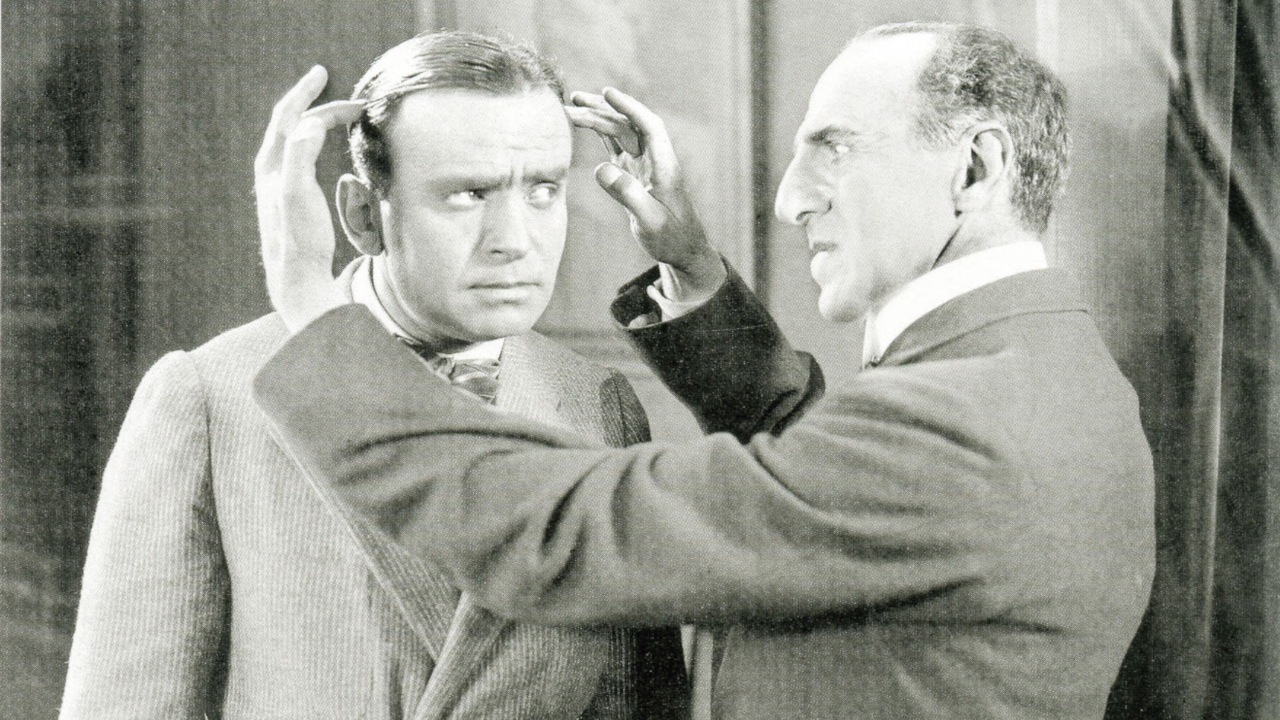
1919 was a good year for the star of this film, Douglas Fairbanks. Together with his best friend (Charlie Chaplin), his future wife (Mary Pickford), and D.W. Griffith, they founded United Artists. These four individuals were essentially the biggest stars in town at the time. They banded together to form United Artists in order to secure more financial and artistic control over their work.
The following year Fairbanks would marry Pickford and the first major celebrity couple is born. Though I doubt the fans merged their names into one. What would that even be anyway? Maryouglas? Dougary? They were however considered Hollywood royalty and Fairbanks was subsequently nicknamed “The King of Hollywood.” Fairbanks would also go on to host the first Academy Awards. Oh, and one more fun fact about Fairbanks you should know. Douglas Fairbanks was the inspiration for the look of Superman. When the Clouds Roll By was the first film Victor Fleming directed. Fleming would go on to have quite the distinguished career as a Hollywood director. Two of his more famous films were released twenty years later in 1939. One being The Wizard of Oz and the other for which he took home his academy award for Best Director was called Gone with the Wind.
So there you have it. Some of the backstory, the gossip, and fun facts from the films and talent we showcased in our 1919 Centennial Cinema. Not to mention all those connections to Superman in a six degrees of Kevin Bacon kind of way. Again we thank all those who helped make the evening possible, as well as all of those who came out to see these pictures.
I hope you will join us next year for the 1920 Cinema Centennial!